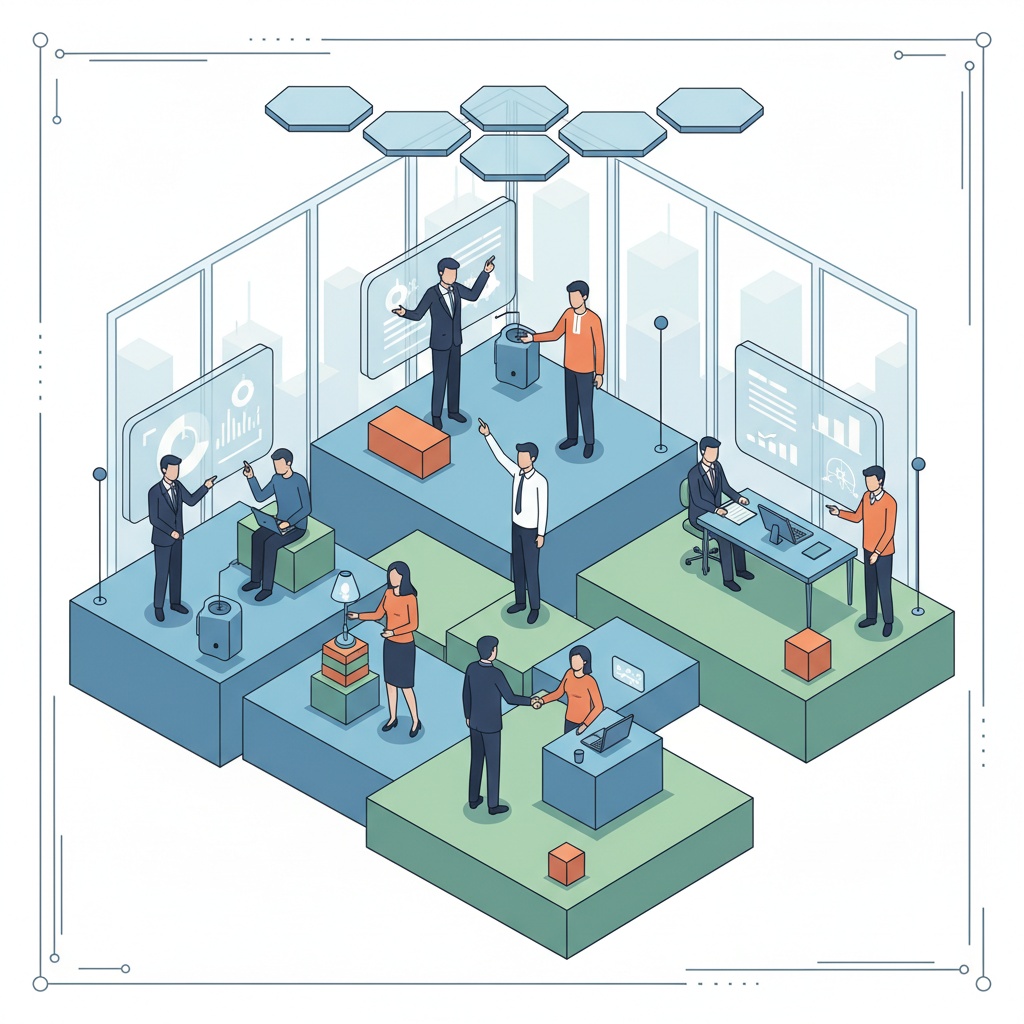
Food delivery platforms integrating with restaurant technology
Food Delivery Platforms Integrating with Restaurant Technology: The Complete Integration Playbook
Reading time: 12 minutes
Ever watched your kitchen staff juggle three tablets while orders pile up and frustrated customers wait for updates? You’re witnessing the painful reality of disjointed restaurant technology. Let’s transform that chaos into a seamless operation that actually works for your business.
The restaurant industry is undergoing a digital revolution. In 2023, online food delivery generated over $1.2 trillion globally, with projections reaching $1.8 trillion by 2028. Yet here’s the kicker: 63% of restaurant operators report that managing multiple delivery platforms remains their biggest operational headache. The integration between food delivery platforms and restaurant technology isn’t just a nice-to-have anymore—it’s the difference between drowning in orders and scaling profitably.
Table of Contents
- Understanding the Integration Landscape
- Core Integration Components That Matter
- Practical Implementation Strategies
- Overcoming Common Integration Challenges
- Measuring Integration Success
- Your Future-Proof Integration Roadmap
- Frequently Asked Questions
Understanding the Integration Landscape
Well, here’s the straight talk: Restaurant technology integration isn’t about connecting every possible system—it’s about creating an ecosystem where critical data flows automatically between platforms that actually impact your bottom line.
The Integration Stack: What Actually Matters
Modern restaurant operations typically involve 5-7 different technology systems. The challenge? Making them communicate effectively. Let’s break down the essential components:
Point-of-Sale (POS) Systems: Your command center. Whether you’re running Toast, Square, Clover, or legacy systems like Aloha, your POS needs to receive delivery orders automatically. Consider Maria’s Pizzeria in Chicago—before integration, staff manually entered every DoorDash, Uber Eats, and Grubhub order into their Square system. That’s 12-15 minutes per hour lost to data entry. After implementing middleware integration, those orders now flow directly into their kitchen display system.
Kitchen Display Systems (KDS): The visual brain of your operation. Integration here means delivery orders appear alongside dine-in tickets with clear priority indicators, preparation times, and platform-specific requirements.
Inventory Management: Real-time stock tracking prevents the nightmare scenario of accepting orders for items you’ve run out of. According to restaurant technology analyst Sarah Chen, “Restaurants lose an average of $1,200 monthly from unfulfilled orders due to inventory mismatches.”
The API Revolution: Making Systems Talk
Application Programming Interfaces (APIs) are the translators that allow different systems to communicate. Major delivery platforms now offer robust APIs:
Delivery Platform API Capabilities Comparison
Integration scores based on API documentation quality, feature completeness, and third-party developer feedback (2025 data)
Core Integration Components That Matter
Menu Synchronization: The Foundation
Imagine this scenario: You update your prices on Thursday, but your DoorDash menu still shows last month’s pricing. Over the weekend, you take 127 orders at the old price. That’s real money lost.
Menu synchronization ensures:
- Pricing consistency across all platforms
- Real-time updates for item availability
- Modifier and customization options match your POS
- Special instructions flow correctly to kitchen staff
Pro Tip: Implement a centralized menu management system. Platforms like Olo, ChowNow, or ItsaCheckmate allow you to update once and push changes to all delivery platforms simultaneously. Restaurants using centralized menu management report 94% fewer pricing discrepancies.
Order Management: Automating the Chaos
Manual order management is where most restaurants bleed efficiency. Let’s examine two approaches:
| Metric | Manual Management | Integrated System | Improvement |
|---|---|---|---|
| Order Processing Time | 3-5 minutes | 15-30 seconds | 90% faster |
| Error Rate | 12-18% | 2-4% | 78% reduction |
| Staff Hours Saved | Baseline | 15-20 hrs/week | $180-300/week |
| Customer Satisfaction | 3.8/5 average | 4.6/5 average | 21% increase |
| Peak Hour Capacity | 45 orders/hour | 85 orders/hour | 89% increase |
Financial Reconciliation: Following the Money
Quick question: Can you tell me exactly how much each delivery platform owes you right now? If you hesitated, you need better financial integration.
Modern integration platforms automatically:
- Track commission rates across different platforms and menu items
- Reconcile daily deposits against order volumes
- Identify discrepancies in real-time (missing payments, incorrect commission charges)
- Generate tax-ready reports breaking down revenue by source
Real-world impact: Bamboo Garden, a mid-sized restaurant group in Austin, discovered $4,300 in unclaimed revenue within their first month of implementing automated reconciliation. Their controller explained, “We were losing money in the gaps between systems and didn’t even know it.”
Practical Implementation Strategies
The Phased Approach: Starting Smart
Attempting to integrate everything simultaneously is a recipe for disaster. Here’s a battle-tested roadmap:
Phase 1: Foundation (Weeks 1-2)
- Audit your current technology stack
- Identify your highest-volume delivery platform
- Implement POS integration for that single platform
- Train staff on the new workflow
Phase 2: Expansion (Weeks 3-4)
- Add remaining delivery platforms to POS integration
- Connect your KDS system
- Set up basic menu synchronization
Phase 3: Optimization (Weeks 5-8)
- Integrate inventory management
- Implement automated financial reconciliation
- Set up reporting dashboards
- Fine-tune automated responses and timing
Choosing Your Integration Solution
You’ve got three main paths forward:
1. Native POS Integrations: Many modern POS systems (Toast, Square, Lightspeed) offer built-in delivery platform connections. Best for: Single-location restaurants with straightforward needs.
2. Middleware Platforms: Services like Chex, Deliverect, or ItsaCheckmate sit between delivery platforms and your POS. Best for: Multi-location operations or those using legacy POS systems. Cost: $150-400/month per location.
3. Custom API Integration: Direct integration built by developers. Best for: Large operations with unique requirements and technical resources. Initial cost: $15,000-50,000+.
Pro Tip: Start with middleware platforms. They offer 80% of the benefits at 20% of the cost, with implementation typically taking 1-2 weeks versus 2-6 months for custom solutions.
Overcoming Common Integration Challenges
Challenge 1: Data Silos and Inconsistencies
The problem: Your POS shows one set of sales data, your delivery platforms show another, and your accounting software shows a third. This creates decision-making paralysis.
The solution: Establish a single source of truth. Most integration platforms can push all delivery orders into your POS, making it your canonical data source. Then, connect your accounting software to pull from the POS only.
Action step: Conduct a weekly data validation for the first month. Compare total orders, revenue, and item counts across systems. Discrepancies should decrease by 90% within three weeks of proper integration.
Challenge 2: Menu Complexity and Special Requests
Let’s be honest: your restaurant probably has 50+ menu items with dozens of possible modifications. Multiply that across four delivery platforms, and you’ve got a maintenance nightmare.
The solution: Standardize your digital menu architecture.
- Create a master item list with SKUs
- Define modifier groups consistently (size, temperature, add-ons)
- Limit platform-specific variations to 10% of your menu
- Use tags or categories that translate across platforms
Case study: Dragon Express simplified their 240-item menu to 85 core items with standardized modifiers. Result? Menu update time dropped from 6 hours to 20 minutes, and order accuracy improved from 82% to 97%.
Challenge 3: Peak Hour Performance Issues
Your integration works beautifully at 2 PM on Tuesday. Then Friday dinner rush hits, and orders start backing up, tablets freeze, and your staff switches back to manual entry.
The solution: Stress-test and optimize for peak performance:
- Ensure your internet connection provides at least 100 Mbps download/20 Mbps upload
- Implement dedicated WiFi networks for restaurant tech (separate from guest WiFi)
- Configure order throttling during extreme peaks (temporarily extend prep times by 5-10 minutes)
- Set up failover procedures—know exactly what manual processes to follow if systems go down
Measuring Integration Success
Here’s what actually matters when evaluating your integration performance:
Operational Metrics:
- Order Accuracy Rate: Target 95%+ (from order receipt to kitchen preparation)
- Average Order Processing Time: Under 60 seconds from platform notification to kitchen display
- Menu Update Propagation Time: Changes should appear on all platforms within 15 minutes
- System Uptime: 99.5%+ availability during operating hours
Financial Metrics:
- Labor Cost Reduction: Most restaurants see 15-25% reduction in order management labor
- Revenue Capture: Eliminate the 3-7% of orders lost to manual entry errors or missed notifications
- Reconciliation Time: Cut from 4-8 hours weekly to under 30 minutes
Customer Experience Metrics:
- On-Time Delivery Rate: Should improve by 20-30% with proper integration
- Order Accuracy Ratings: Watch your platform ratings climb toward 4.7+
- Refund Rate: Target under 2% of total orders
Pro Tip: The best metric? Revenue per labor hour on delivery orders. This captures both efficiency gains and quality improvements. Top performers achieve $180-250 in delivery revenue per labor hour after integration, compared to $90-130 before.
Your Future-Proof Integration Roadmap
Ready to transform your delivery operations from reactive chaos to proactive efficiency? Here’s your actionable roadmap:
Immediate Actions (This Week):
- ✓ Document your current technology stack and pain points
- ✓ Calculate how many hours weekly your team spends on delivery order management
- ✓ Request demos from 2-3 middleware integration providers
- ✓ Check if your current POS offers native delivery platform integrations
30-Day Implementation Sprint:
- ✓ Select and onboard an integration solution
- ✓ Connect your highest-volume delivery platform first
- ✓ Train staff on automated workflows during slow periods
- ✓ Establish baseline metrics for comparison
Ongoing Optimization (Quarterly):
- ✓ Review platform performance analytics
- ✓ Audit menu consistency across all channels
- ✓ Assess new integration features from your providers
- ✓ Gather staff feedback on workflow improvements
The restaurant technology landscape continues evolving rapidly. We’re seeing artificial intelligence predict demand patterns, blockchain technology ensure transparent commission tracking, and IoT devices automatically updating inventory. The restaurants thriving five years from now will be those who mastered integration fundamentals today.
Where does your restaurant stand? Are you still manually entering orders at 7 PM on Friday, or are you leveraging integrated systems to serve more customers with less stress? The technology exists, it’s affordable, and it works. The only question remaining: When will you make the leap?
Your customers are ordering online. Your competitors are integrating. Your staff deserves better tools. What’s your next move?
Frequently Asked Questions
How much does restaurant delivery platform integration typically cost?
Integration costs vary widely based on your approach. Middleware solutions like Deliverect or Chex typically range from $150-400 per month per location, with one-time setup fees of $200-500. Native POS integrations are often included in your existing POS subscription or add $50-150 monthly. Custom API development starts around $15,000 but can exceed $50,000 for complex operations. Most single-location restaurants find optimal value in middleware solutions, achieving ROI within 2-4 months through labor savings and error reduction. Factor in the hidden costs of NOT integrating: labor hours (typically 15-20 hours weekly at $15/hour = $300-400/week), order errors costing 5-7% of delivery revenue, and missed orders worth 3-5% of potential sales.
Can I integrate delivery platforms with my older POS system?
Absolutely. This is precisely what middleware integration platforms were designed to solve. Systems like ItsaCheckmate, Chex, and Ordermark work with legacy POS systems including Aloha, Micros, POSitouch, and others through various connection methods: direct API integration (if available), automated tablet readers that capture screen data, or even printer integration where orders print directly to kitchen printers. The key consideration is that older systems may require additional hardware like tablet consolidators or print interceptors (typically $200-400). While the integration might not be as seamless as with modern cloud-based POS systems, you’ll still capture 70-85% of the efficiency gains. Many restaurants successfully integrate legacy systems and plan POS upgrades as a separate future investment rather than a prerequisite.
What happens if the integration system goes down during service?
Robust integration solutions include multiple failover mechanisms. First, most platforms offer 99.5%+ uptime guarantees, meaning outages are rare. Second, when issues occur, orders automatically revert to the delivery platform tablets—your staff can temporarily manage orders manually without losing them entirely. Third, quality providers offer 24/7 technical support with response times under 15 minutes for critical issues. The key is preparation: document a clear backup procedure for your team, ensure staff knows how to quickly switch to manual mode, and maintain tablets charged and accessible. Most restaurants experience zero customer-facing impact during the rare integration hiccups because orders still arrive through platform apps. Pro tip: Run a quarterly “disaster drill” where you intentionally operate manually for 30 minutes to keep staff comfortable with backup procedures.